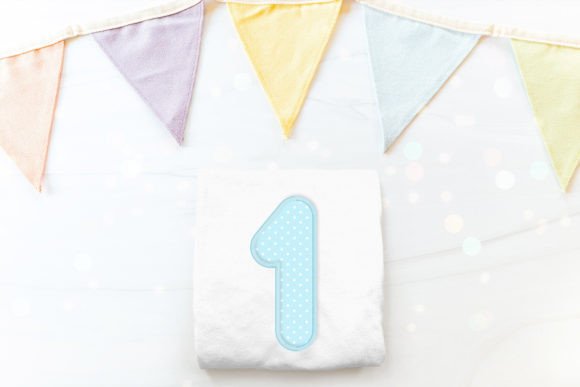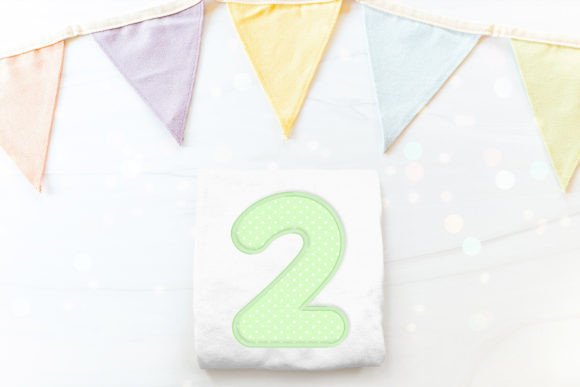
Cute Round Number 2 Applique Embroidery
A Business-Ready Applique for Brand Consistency and Milestone Merch
As an embroidery designer who’s developed hundreds of commercial designs for small businesses—from neighborhood bakeries to boutique pet brands—I approached the Cute Round Number 2 Applique Embroidery with a dual lens: aesthetic appeal and real-world production viability. The title alone tells me this isn’t just decorative—it’s purpose-built for milestones, branding, and repeat-use merchandise. “Cute rounded style” signals approachability and warmth—ideal for businesses that want to feel personal without sacrificing polish. It’s not overly cutesy or childish; it’s friendly, confident, and scalable. That balance is rare—and valuable—for small business merch.
Where This Design Shines in Commercial Use
The Cute Round Number 2 Applique Embroidery excels where clarity, charm, and cohesion matter most. Think café aprons stitched with “2” to mark a second anniversary, florist tote bags celebrating “Year 2” of seasonal blooms, or handmade studio patches for artisanal product packaging. Because it’s an applique—not a fill-heavy digitized font—it carries visual weight while staying lightweight on fabric. That makes it ideal for:
- Embroidered patches (heat-seal or sew-on) used across staff uniforms, Etsy shop bundles, or customer thank-you kits
- Cap embroidery on the front panel or side gusset—its rounded shape flows naturally on curved surfaces
- Apron embroidery near the pocket or hem, adding subtle brand storytelling without overwhelming functional wear
- Tote bag design as a minimalist accent—especially effective when paired with a custom logo or tagline
- Custom apparel like kids’ tees for a boutique, or matching sibling sets where “2” represents family size or milestone age
Its versatility extends beyond Birthdays and baby milestones—it’s equally at home in a creative studio’s rebranding rollout or a local florist’s “Second Season” limited-edition line.
Smart Placement & Practical Limits
While the Cute Round Number 2 Applique Embroidery is highly adaptable, it demands thoughtful placement. On cap fronts under 2.5 inches wide, stick to the larger sizes (95 mm) only if your hoop and machine allow clean, distortion-free stitching—smaller versions may lose definition on tight curves. Avoid using the smallest sizes (70 mm) on textured fabrics like heavy canvas or terry cloth unless you’ve tested stabilizer pairing first. High stitch density isn’t mentioned in the description, but as an applique, its performance hinges more on clean edge satin stitches than dense fills—so it’s inherently wash-durable and low-risk for high-turnover items like staff aprons or reusable totes.
Dark uniforms? Pair it with high-contrast thread—white or neon yellow works beautifully against navy or charcoal. For light fabrics, consider tonal stitching (e.g., light gray on ivory) for subtle sophistication. Always test on your actual garment fabric—not just stabilizer swatches—to verify how the applique’s edges hold up after laundering.
How It Strengthens Brand Identity
In small business branding, consistency isn’t just about color palettes—it’s about tone, texture, and recognition at a glance. The Cute Round Number 2 Applique Embroidery reinforces a brand voice that’s warm, intentional, and human-scaled. When customers see it repeated across aprons, patches, and tote bags, they subconsciously register continuity and care. That builds trust faster than generic clipart ever could. For Etsy sellers or handmade product creators, it elevates perceived value: a thoughtfully embroidered “2” signals craftsmanship—not mass production. And because it’s rooted in milestone storytelling (Birthdays, anniversaries, growth), it invites emotional connection—making merch feel less like promotion and more like shared celebration.
Essential Designer Notes Before You Stitch
Before launching into production, run these checks—every time:
- Test in black and white first. Confirm legibility and contrast before committing to full thread colors.
- Verify patch-size viability. Try the 70 mm version on a 3-inch hoop—if elements blur or satin stitches skip, scale up or adjust tension.
- Review thread color contrast against your base fabric under natural and retail lighting.
- Inspect spacing and clearance. Ensure no part of the number touches seam allowances or folds on caps or sleeves.
- Confirm hoop size compatibility—especially for the 95 mm version—before loading into your embroidery machine.
- Test on real fabric with proper stabilizer. A tear-away works for stable cottons; switch to cut-away for knits or stretchy blends.
- Create a printable mockup for client approval—this avoids costly rework and sets clear expectations.
- Compare beside your other design assets. Does it align visually with your logo, typography, and existing patches?
- Confirm commercial licensing. Since this is intended for small business merch and branded patch use, ensure your purchase grants rights for resale and distribution.
Remember: the included 8 formats (DST, EXP, HUS, JEF, PEC, PES, VP3, XXX) and 6 sizes mean flexibility—but only if you match file type to your machine and size to your application. Don’t assume the “best” size is universal. A 95 mm version might be perfect for a tote bag design but overwhelming on a child’s cap.
Final Thought: More Than a Number—A Branding Anchor
The Cute Round Number 2 Applique Embroidery isn’t just another machine embroidery design—it’s a strategic tool. In the hands of a small business owner or embroidery shop, it transforms simple numerals into signature moments: the “2” on a bakery’s second-location apron, the “2” stitched inside a pet brand’s bandana packaging, the “2” anchoring a creative studio’s limited-run tote collection. It bridges playfulness and professionalism, making it one of those rare digital embroidery files that earns repeat use—not just for Birthdays, but for identity-building, customer loyalty, and tangible brand presence. Treat it with intention, test it with rigor, and let it do quiet, consistent work for your business.