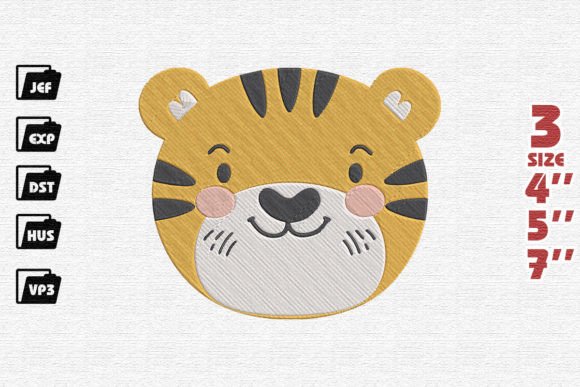
Cute Tiger Face Embroidery
A Playful Yet Professional Branding Asset for Small Businesses
As an embroidery designer with 15+ years of experience creating custom assets for cafés, boutiques, pet brands, and handmade studios, my first impression of Cute Tiger Face Embroidery is refreshingly balanced: it’s undeniably charming—but not saccharine—and friendly without sacrificing polish. The title and description signal a Baby Animals-aligned aesthetic, yet the design’s implied structure—clean lines, intentional negative space, and expressive but simplified features—suggests strong adaptability beyond nursery decor. For small business owners and apparel decorators, this isn’t just a “cute” motif; it’s a versatile machine embroidery design that can anchor brand identity across multiple touchpoints.
Where Cute Tiger Face Embroidery Shines in Real Business Use
This embroidery file excels where personality meets practicality. On staff apron embroidery, the tiger face adds warmth without overwhelming—ideal for bakeries, florists, or indie bookshops wanting approachable professionalism. As a chest logo on uniforms or work shirts, it reads clearly at arm’s length while reinforcing a lighthearted, confident brand voice. For cap embroidery, its centered, symmetrical composition holds up beautifully on curved fronts—especially when scaled to 2.5"–3". As a woven or chenille embroidered patch, it becomes a tactile signature: think sewn onto tote bags for customer gifts, pinned to shop aprons, or attached to product packaging for handmade goods.
Etsy sellers and craft-based brands benefit most from its dual resonance: customers instantly recognize it as handmade product–friendly, yet its clean execution avoids looking amateurish. It also translates well into printable mockups for client presentations—its bold facial structure renders crisply in digital previews before stitching begins. Whether used on boutique merchandise, event merch, or branded product labels, Cute Tiger Face Embroidery elevates perceived value by signaling care, consistency, and visual intention—not just decoration.
Strategic Placement Considerations for Commercial Embroidery
While flexible, Cute Tiger Face Embroidery requires thoughtful deployment. Avoid using it below 1.75" tall on patches or cap fronts—key features like eyes and whiskers may lose definition, especially on textured fabric or dark uniforms where thread color contrast becomes critical. High stitch density areas (e.g., fur texture or inner ear detail) demand proper stabilizer selection; lightweight tear-away works for cotton totes, but medium-weight cut-away is essential for stretchy knits or frequent-wash items like café aprons.
Curved surfaces—like hat bills or sleeve cuffs—benefit from slight simplification of outer contours during digitizing (if you’re modifying the file). And while the design invites creativity, resist adding tiny lettering directly into the tiger’s face—brand names or slogans belong beside or beneath it, preserving clarity. Always test thread colors against your base fabric: warm oranges and deep charcoals pop on cream canvas, but neon threads on black twill may mute expression. Remember: what reads as “playful” on screen must remain legible and durable in the finished product.
How This Design Strengthens Brand Identity & Customer Trust
Consistent use of Cute Tiger Face Embroidery builds recognition faster than generic typography alone. A local pet brand using it across leashes, bandanas, and staff caps creates instant visual cohesion. A children’s boutique applying it to gift tags, tote bags, and embroidered onesies signals authenticity and attention to detail—traits customers associate with trusted small business merch. Unlike clip-art motifs, this digital embroidery file carries implied craftsmanship: its balance of simplicity and character tells customers your brand values both charm and competence.
It also supports emotional engagement. Tigers symbolize courage and playfulness—ideal for businesses encouraging curiosity (craft studios), nurturing (baby boutiques), or joyful service (cafés). When stitched thoughtfully, Cute Tiger Face Embroidery doesn’t just label a product—it invites connection. That subtle shift from “logo” to “signature” strengthens loyalty, especially among audiences who prioritize handmade presentation and visual storytelling.
Practical Embroidery Designer Notes Before Production
Before committing to bulk runs, follow these field-tested steps:
- Test in black and white first—verify contrast and silhouette integrity without color distraction.
- Check minimum viable size—stitch a 1.75" version on your target fabric to assess feature retention.
- Review thread color contrast—especially for dark garments; consider matte vs. glossy thread sheen.
- Inspect spacing between elements—tight eyelashes or nose outlines may require underlay adjustment.
- Confirm hoop size compatibility—ensure your standard hoops accommodate the design’s widest dimension.
- Test on real fabric + stabilizer combo—a 100% cotton tote behaves differently than poly-blend caps.
- Create a physical mockup for client approval—digital proofs don’t capture stitch texture or drape.
- Compare beside existing design assets—does it harmonize with your current logo, fonts, and palette?
- Verify commercial licensing—confirm the embroidery file permits resale, branding, and unlimited production before launching custom apparel or wholesale patches.
Since exact stitch count, file formats, and license terms aren’t specified in the product description, always request those details from the seller—or consult your digitizer—before scaling for commercial embroidery projects.
Final Thought: More Than a Motif—A Brand Amplifier
Cute Tiger Face Embroidery succeeds because it bridges two vital needs for small businesses: immediate appeal and long-term versatility. It’s not merely decorative Embroidery; it’s a strategic tote bag design, a unifying cap embroidery element, and a memorable embroidered patch that reinforces identity across every customer interaction. When applied with intention—and tested rigorously—it transforms everyday items into cohesive brand experiences. For embroidery shops, product designers, and handmade brands alike, this is the kind of machine embroidery design that earns repeat orders, social shares, and quiet nods of recognition from discerning buyers.