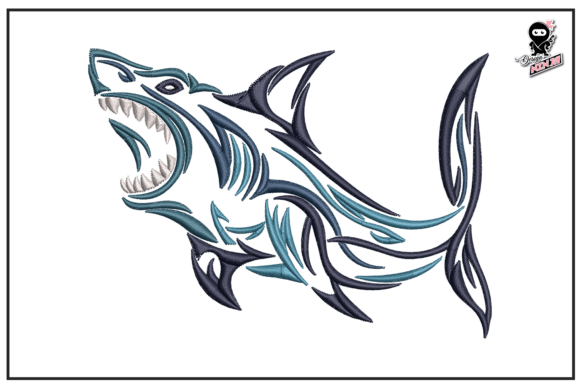
Shark Outline, Ocean Embroidery
A Craft Fair Designer’s First Look: Bold, Minimal, and Instantly Recognizable
As someone who’s stitched hundreds of designs for weekend craft fairs, boutique pop-ups, and Etsy launches, my first impression of Shark Outline, Ocean Embroidery is immediate: it’s bold without being busy, minimal without feeling sparse, and ocean-themed without leaning into cliché seashells or cartoon waves. The word “outline” in the title tells me this isn’t a filled-in marine illustration—it’s clean, graphic, and confident. That makes it versatile across age groups and aesthetics: teens love its edge, parents appreciate its subtlety on kids’ totes, and coastal boutiques find it refreshingly modern next to nautical stripes or linen aprons.
Where It Shines on Real Craft Fair Products
This machine embroidery design excels where clarity, contrast, and charm intersect—exactly what you need when shoppers are scanning your booth in under three seconds.
- Tote bag design: Perfect centered on the front panel of natural canvas or navy cotton. The outline reads clearly even at 4–5 inches wide—large enough to catch eyes from across the aisle, small enough to leave room for hand-stamped tags or coordinating fabric paint accents.
- Apron embroidery: Ideal on the lower left pocket or upper chest. Its streamlined shape avoids visual competition with functional pockets or straps, and the shark’s forward-facing angle subtly guides the eye toward your booth signage or pricing cards.
- Tea towel embroidery: Works beautifully in the corner or along the hem. On textured flour-sack cotton, the clean lines hold up better than detailed fish silhouettes—and customers consistently reach for embroidered kitchen textiles as impulse gifts.
- Embroidered patch: A standout when heat-applied or sewn onto denim jackets, market bags, or backpacks. Because it’s an outline, it stitches quickly, uses less thread, and presses flat—critical for patches meant to be ironed on by customers at home.
- Pillow cover & pouch embroidery: At 3–4 inches tall, it anchors a neutral linen pillow without overwhelming. On small fabric pouches (think gift-sized toiletry or seed packet holders), it adds handmade credibility without requiring complex digitizing.
What Makes It a Smart Choice for Handmade Sellers
Shark Outline, Ocean Embroidery delivers strong ROI for time-strapped makers. As a digital embroidery file, it’s easy to understand at a glance—no confusing layers, no nested elements. You can run it as a small accent (1.8" on a cap brim) or scale it up cleanly to 6" on a beach towel—just confirm your machine handles the expanded hoop size before stitching. Its low stitch density means faster runs, cooler needles, and less stabilizer waste. That’s crucial when producing 30+ craft fair products in two days.
Photographically? It’s a winner. The outline pops against both light and dark fabrics, especially with high-contrast thread colors like white-on-navy or kelly green-on-cream. That translates directly to stronger Etsy listings, more engaging printable mockups, and cleaner social media thumbnails—no retouching needed.
Careful-Use Notes Every Embroidery Designer Should Check
Even sleek outlines demand attention to detail before batch production:
- Dense stitch areas: None here—this is pure outline work—but verify spacing between parallel lines if you’re scaling beyond 150%. Gaps that look fine at 100% may close up and cause thread nesting.
- Curved surfaces: On caps or curved tote handles, test the design on scrap fabric first. Outlines hold up better than filled motifs, but tight curves may require re-hooping or minor digitizing tweaks.
- Textured towels: Flour-sack or terry cloth needs medium-weight cutaway stabilizer underneath—don’t rely on tear-away alone. The outline’s simplicity helps, but loose loops still snag on raised pile.
- Dark fabric: Use bright white or metallic silver thread for maximum visibility. Avoid pastel threads unless you’re aiming for a soft, submerged effect—and even then, test contrast under booth lighting.
- Small sizes: Below 1.5", the shark’s eye or gill details may blur. Stick to ≥2" for caps, patches, or keychain pouches unless your machine and thread support ultra-fine work.
How It Elevates Your Booth, Brand, and Buyer Connection
In a sea of floral hoops and quote-based embroidery, Shark Outline, Ocean Embroidery stands out as quietly confident—not cute, not kitschy, not corporate. It signals craftsmanship over trend-chasing. Customers pause longer because it feels intentional, not algorithmic. That pause becomes a conversation: “Is that a great white?” “Do you do custom sizes?” “Can I get it on a tea towel?”
For small shop products, it strengthens brand consistency—especially if you pair it with other ocean-adjacent designs (like coral line art or wave borders) using the same thread palette and stitch weight. For commercial embroidery sellers, it’s licensable, scalable, and seasonless—equally relevant for summer markets, aquarium fundraisers, or coastal wedding favors.
Final Designer Checklist Before You Stitch
- Test the embroidery file on scrap fabric matching your final product’s weight and texture.
- Check thread contrast under natural and booth-style lighting—not just your studio lamp.
- Review spacing and stitch density in your embroidery software; zoom in to spot potential gaps or overlaps.
- Confirm hoop size compatibility—especially if scaling beyond the original dimensions.
- Choose stabilizer based on fabric texture: cutaway for knits and terrycloth, tear-away for stable cottons.
- Create at least one real, photographed finished product—not just a digital mockup—to assess true proportion and impact.
- Compare how it reads on multiple fabric colors (cream, navy, charcoal, ecru) before committing to bulk thread purchases.
- Verify commercial licensing terms—some digital embroidery files restrict resale of finished goods unless upgraded.
When done right, Shark Outline, Ocean Embroidery doesn’t just decorate a tote bag—it invites curiosity, reinforces handmade quality, and quietly says, “This seller knows their craft.” That’s the kind of detail that turns a $22 purchase into a repeat customer, a booth tag into an Instagram story, and a single handmade product into a signature collection.