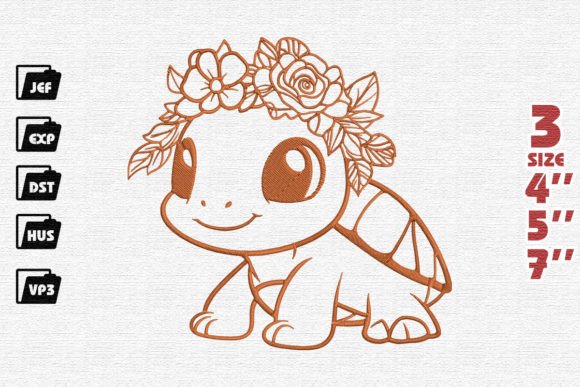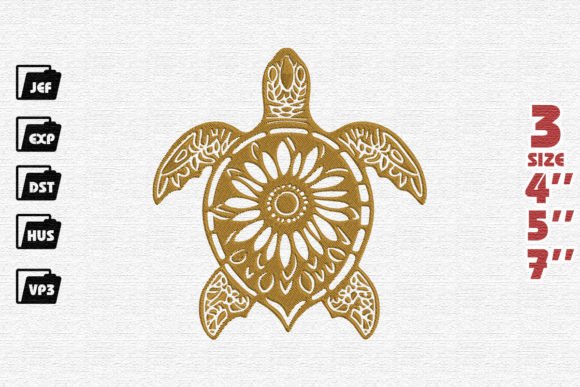
Turtle Mandala Embroidery
First Impression: Calm, Collectible, and Quietly Confident
As an embroidery designer who’s curated over 200 craft fair booths, I’ll say it plainly: Turtle Mandala Embroidery doesn’t shout — it invites. It lands somewhere between mindful modern and softly spiritual: not overtly religious, not cutesy or cartoonish, but deeply intentional. The pairing of turtle (a symbol of patience, grounding, and longevity) with mandala (precision, balance, sacred geometry) creates quiet sophistication. This isn’t a “funny animal” design or a rustic farmhouse motif — it’s a premium handmade product anchor. Customers pause longer at booth displays featuring this kind of visual calm, especially when surrounded by busier patterns.
Where Turtle Mandala Embroidery Shines on Craft Fair Products
Not every embroidery file translates equally across surfaces — Turtle Mandala Embroidery excels where clarity, symmetry, and subtle storytelling matter most:
- Tote bags: Works beautifully as a centered 4–5" chest placement. The radial symmetry reads cleanly from a distance, and the turtle’s gentle curve mirrors the bag’s drape. Ideal for eco-conscious shoppers and boutique gift buyers.
- Aprons and tea towel embroidery: A standout on natural linen or unbleached cotton. The mandala’s repetition harmonizes with kitchen rhythm; the turtle adds warmth without whimsy. Avoid placing too low on aprons — center-chest or upper left pocket area maximizes visibility.
- Embroidered patches: Highly effective at 2.5–3". Clean outer edge + strong central motif = excellent sew-on versatility. Perfect for denim jackets, market bags, or kids’ backpacks.
- Pillow covers and small pouches: At 3–4", Turtle Mandala Embroidery becomes a tactile focal point. Its balanced layout prevents visual “heaviness” on soft goods — unlike dense florals or lettering-heavy designs.
- Caps and curved surfaces: Use caution. The mandala’s fine inner rings and turtle’s delicate flippers may distort or lose definition on high-crown or structured caps unless digitized with curvature compensation. Not ideal for first-run production here.
What Holds Back Broader Application (and How to Work Around It)
Turtle Mandala Embroidery is intricate — and that’s both its strength and its limitation. As a machine embroidery design, it demands thoughtful execution:
- Stitch density matters: Dense inner mandala layers + fine turtle contour lines mean higher stitch count. On textured tea towels or thick canvas, under-stabilizing will cause puckering. Always use cutaway + tear-away combo stabilizer for best results.
- Small details fade fast: Below 2", the turtle’s eye, shell segmentation, or mandala petal tips blur. Avoid using Turtle Mandala Embroidery as a tiny accent on cuffbands or keychains — it needs breathing room.
- Dark fabric requires contrast testing: Light thread on navy or charcoal can vanish. Test thread colors on your exact fabric — not just white swatches. Metallic or matte pearl threads elevate perceived value on dark backgrounds.
- Curved or stretchy fabrics demand digitizing review: If your embroidery file wasn’t optimized for knits or hats, don’t assume it will hold. Always run a test on scrap before committing to batch production.
Real-World Selling Power at the Craft Fair Booth
In a crowded marketplace, Turtle Mandala Embroidery builds cohesion and curiosity. When grouped with complementary items — a linen tea towel, matching embroidered pouch, and minimalist tote — it signals brand intention. Buyers associate it with quality, mindfulness, and artisan care. It photographs exceptionally well for Etsy listings and printable mockups: clean lines, balanced negative space, and consistent light reflection make it highly scroll-stopping in digital feeds.
It also supports pricing confidence. Unlike generic floral motifs, Turtle Mandala Embroidery feels distinctive enough to justify a $5–$12 premium per item — especially when paired with natural fibers and thoughtful packaging. For small shop products, that margin difference compounds quickly across a weekend.
Essential Designer Notes Before You Produce
This isn’t just about stitching — it’s about selling trust. Before cutting your first fabric yard or uploading to Etsy:
- Test Turtle Mandala Embroidery on scrap fabric *in your actual production setup* — same hoop size, same stabilizer, same thread brands.
- Check spacing between mandala layers and turtle outline — tight gaps may merge on low-tension machines.
- Confirm commercial licensing status if you plan to sell finished products. Many digital embroidery file sellers restrict resale rights unless explicitly stated.
- Create at least one real-world mockup: embroider it on your chosen tote bag fabric, photograph it in natural light, and compare how it looks next to your other top-selling designs.
- Compare fabric textures side-by-side — Turtle Mandala Embroidery reads sharper on smooth cotton poplin than on looped terry or heavy duck canvas.
- Review thread color harmony across your collection. If your brand palette uses sage, cream, and terracotta, choose thread colors that reinforce — not compete with — that story.
Final Thought: A Design That Sells Because It Feels Human
Turtle Mandala Embroidery stands apart in the Animals category not because it’s flashy, but because it resonates. It speaks to buyers seeking meaning, not just decoration — the same audience who lingers at your booth, asks about your process, and returns for holiday gifts. It’s not the easiest machine embroidery design to run at scale, but its perceived handmade quality, visual serenity, and symbolic depth make it worth the extra attention. For Etsy sellers, boutique makers, and craft fair entrepreneurs, Turtle Mandala Embroidery isn’t just another embroidery file — it’s a quiet differentiator in a noisy market.