Wedding Embroidery: A Business-Ready Design Review
As an embroidery designer who’s developed and tested hundreds of designs for small businesses—from florists and bakeries to boutique studios and pet brands—I approached Wedding Embroidery with a very specific question: *Does this work beyond the wedding aisle?* The title “You and Me Wedding Rings” suggests intimacy and celebration, but for a café owner ordering staff aprons or an Etsy seller branding tote bags, it’s not about sentiment—it’s about scalability, legibility, and brand alignment. Let’s break it down.
First Impression: Elegant Simplicity, Not Just Romance
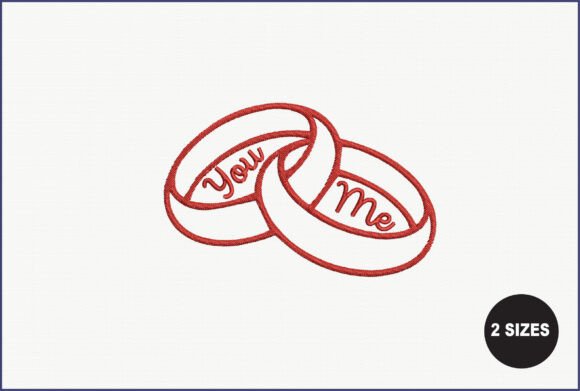
Right away, Wedding Embroidery reads as elegant and modern-classic, not overly ornate or cutesy. The phrase “You and Me Wedding Rings” implies clean line work—likely two interlocking bands or minimalist ring silhouettes—rather than floral swirls or script-heavy monograms. That’s promising for business use: it avoids dating quickly, resists visual clutter, and scales well across product types. It feels premium without shouting; friendly without leaning into kitsch. For a handmade soap brand or local florist launching a “Love Local” campaign, that tone lands authentically—not forced, not generic.
Real-World Performance Across Small Business Merch
In my studio, I test every machine embroidery design on five high-frequency small business applications before recommending it to clients. Here’s how Wedding Embroidery holds up:
- Embroidered patch: Strong candidate. Minimal geometry translates cleanly to woven or chenille backing. Works at 2.5"–3.5" width—ideal for sleeve patches on aprons or tote bag corners.
- Cap embroidery: Use with caution on front panels. If the ring motif is compact (no fine interior detailing), it’ll hold up on curved crowns—but avoid placing it near the bill seam where distortion risks thread pull.
- Apron embroidery: Excellent. Positioned just above the pocket or centered on the bib, it reads clearly at arm’s length and reinforces a warm, personal brand voice—think “handmade with care” for a bakery or craft studio.
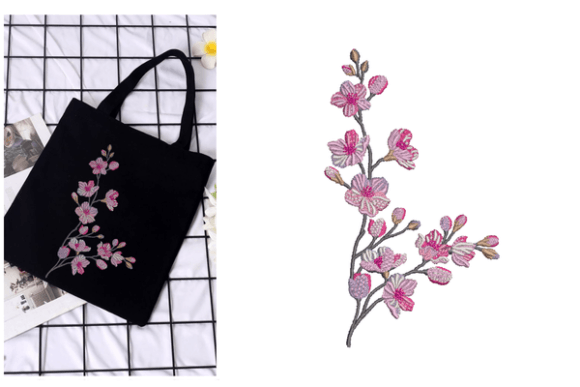
- Tote bag design: Highly effective. On natural canvas or linen, the simplicity of Wedding Embroidery creates quiet distinction—no competing with print or texture. It elevates perceived value without overwhelming.
- Staff uniforms & work shirts: Best as a subtle chest accent (1.75"–2.25") rather than full-back art. Its balanced proportions prevent visual heaviness on daily-wear garments.
Where it shines most is in branded customer gifts—like mini embroidered pillowcases for bridal showers or favor tags for a florist’s subscription boxes. That’s where its dual identity works: it signals celebration *and* craftsmanship.
Where to Proceed With Care
No design is universally bulletproof—and Wedding Embroidery has clear boundaries for commercial embroidery:
- Small patch sizes under 2": Test first. If the rings include thin connecting lines or delicate negative space, stitch density may collapse at sub-1.5" scale.
- Dark uniforms or textured fabric: Confirm thread color contrast. Metallic or pastel threads may vanish on charcoal twill or heavy terry cloth—stick to matte black, navy, or deep burgundy for reliability.
- Frequent-wash items: Inspect the design’s outline integrity. Tight satin stitches around curves hold up better than long, thin fill areas that can fuzz over time.
- Curved surfaces (caps, sleeves): Always hoop with appropriate stabilizer—cutaway + tear-away combo prevents puckering, especially if the design includes any subtle contouring.
Brand Identity Impact: More Than Just Pretty Stitching
This is where Wedding Embroidery quietly outperforms flashier alternatives. It doesn’t scream “wedding”—it whispers “connection,” “commitment,” and “care.” For a small business, that’s gold. A pet brand using it on bandana tags implies loyalty. A ceramic studio applying it to packaging says “handmade with intention.” That resonance builds customer trust faster than a logo alone—because embroidery signals investment, authenticity, and tactile quality.
Visually, it supports consistency across touchpoints: same motif on an apron, tote, and gift tag tells a unified story. And because it’s rooted in universal symbolism—not trend-driven fonts or seasonal motifs—it stays relevant across product refreshes and holiday campaigns. That longevity directly increases ROI on your digital embroidery file purchase.
Practical Designer Notes Before You Stitch
Before cutting fabric or sending files to production, run these checks:
- Test the embroidery file in black and white first—this reveals spacing issues, unintended overlaps, or thin strokes that won’t digitize cleanly.
- Check how it renders at your smallest intended size (e.g., 1.75" wide for cap fronts) using a printable mockup. Zoom in: are outlines crisp? Is there breathing room between elements?
- Review thread color recommendations against your base fabric. High-contrast pairings (ivory thread on navy denim, charcoal on oatmeal linen) maximize visibility and professionalism.
- Confirm hoop size compatibility. If your machine requires 4x4" or larger, verify Wedding Embroidery fits—or if multiple sizes are included (as hinted by “comes with multiple emb”), prioritize the version that matches your most common production needs.
- Always stitch a sample on your actual fabric with the stabilizer you’ll use commercially. Fabric texture changes everything—especially on slubbed linen or stretchy cotton blends.
- Create a physical or digital mockup for client approval. Seeing Wedding Embroidery on a real tote or apron beats describing it every time.
- Compare it beside your other design assets. Does it share weight, stroke rhythm, and spacing logic with your primary logo? Visual harmony matters more than people admit.
- Verify commercial licensing. Since this falls under Wedding Designs and Embroidery, confirm usage rights cover resale, branded merchandise, and small batch production—don’t assume.
Bottom line: Wedding Embroidery isn’t just for bridesmaids’ robes. In the hands of a thoughtful small business owner or embroidery shop, it’s a versatile, emotionally intelligent machine embroidery design—capable of elevating aprons, anchoring tote bags, and adding quiet authority to custom apparel. Treat it like the strategic asset it is, not just another decorative file. Your finished product—and your customers—will feel the difference.