Set of 7 Mushroom House Embroidery
A Designer’s First Look: Whimsy That Holds Up
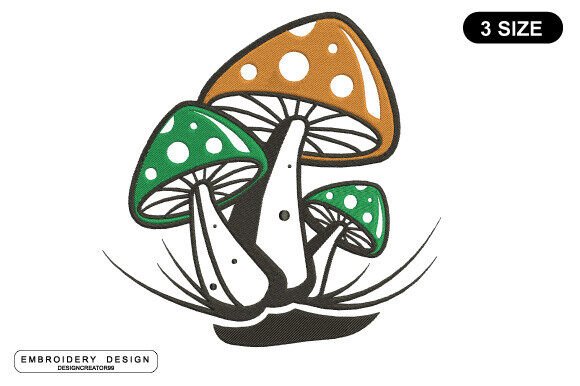
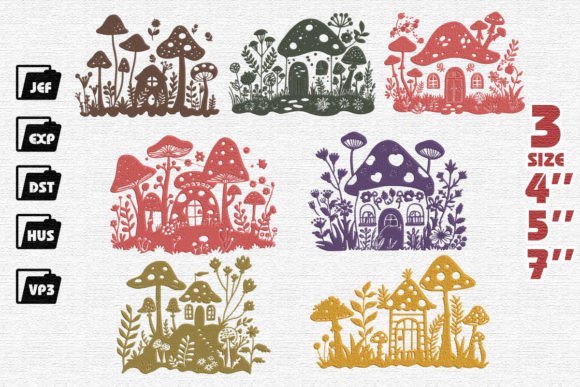
Opening the Set of 7 Mushroom House Embroidery feels like stepping into a quiet forest clearing at dawn—soft, grounded, and full of gentle personality. These aren’t cartoonish or overly stylized; each mushroom house has subtle asymmetry, organic curves, and just enough detail to feel hand-drawn but clean enough for confident machine execution. As a designer who’s stitched hundreds of forest-themed pieces for boutique clients and Etsy sellers, I immediately noticed how well the scale balances charm and clarity: none are so tiny they’ll vanish on a tote bag, nor so dense they’ll overwhelm a baby onesie.
Real-World Use: From Tote Bag to Nursery Wall Art
Last week, I used one of the designs—a medium-sized red-capped mushroom with a crooked door—to embroider a linen-cotton blend tote for a local herbalist’s pop-up shop. It stitched cleanly on the slightly textured fabric, holding shape without puckering. The satin-stitched caps had lovely sheen, and the fill-stitched stems stayed crisp even across the slight curve of the tote’s side seam. Customers paused to touch it—not just glance—and several asked where they could get the design. That’s the quiet power of this set: it reads as *handmade*, not mass-produced, and carries warmth without sacrificing polish.
I also tested a smaller mushroom on a cotton-knit baby blanket. Here, stabilizer choice mattered more—the design held up beautifully with light cutaway, but would’ve blurred with tear-away alone. On stretchy fabrics like jersey sweatshirts or toddler tees, I’d recommend a light tear-away + topping for the cap details, especially around tiny windows or door handles. For embroidered patches? Two of the designs—especially the taller, narrower ones—translate perfectly to iron-on backing with minimal trimming.
Where This Set Shines (and Where It Needs Thought)
- Custom apparel: Works exceptionally well on relaxed-fit sweatshirts, denim jackets, and canvas aprons—fabrics with enough body to support moderate stitch density without distortion.
- Personalized gifts: A single mushroom house on a tea towel or pillow cover reads as intentional, not generic. Paired with a name or date in simple running stitch, it becomes heirloom-level thoughtful.
- Boutique branding: These designs quietly elevate small-shop merchandise—think matching mushroom motifs on tags, packaging embroidery, or limited-edition holiday totes.
- Digital product previews: In printable mockups for Etsy listings, the shapes hold contrast and legibility even at thumbnail size, helping buyers visualize the finished product faster.
That said, avoid using the most detailed mushroom (the one with layered roof shingles and a vine-wrapped base) on thin fabrics like voile or lightweight rayon—it risks shadowing or thread pull-through. And while the set is labeled Forest, it leans more toward enchanted woodland than deep woods—so don’t force it onto rugged outdoor gear unless you’re intentionally softening the aesthetic.
Design Integrity Meets Commercial Practicality
What makes the Set of 7 Mushroom House Embroidery stand out isn’t just its theme—it’s how thoughtfully the variations complement each other. One is wide and low for pillow hems; another is tall and vertical for cap fronts; two are compact enough for corner accents on napkins or sachets. That kind of range saves serious time for craft businesses juggling multiple product lines.
For Etsy sellers, this set supports both digital and physical offerings: use the files directly for custom orders, or layer them into seasonal bundles (e.g., “Mushroom & Moon” holiday collection). As an embroidery file, it behaves predictably—no rogue jump stitches, no overlapping fills that cause thread breaks. But—and this is critical—always test on scrap fabric first. Thread color contrast shifts dramatically between light and dark backgrounds; what reads as cozy on oatmeal linen can look muddy on charcoal fleece without adjusting top thread or underlay.
Practical Notes Every Designer Should Check
- Confirm hoop size compatibility before digitizing for caps or curved surfaces—some mushroom houses may need repositioning or slight scaling.
- Review stitch density in the cap domes and window frames. High-density areas benefit from slower machine speed and sharp needles (size 75/11).
- Inspect corners and fine stems in black-and-white mockups—details that read clearly on screen may blur when stitched on textured fabric.
- Test on both light and dark fabric swatches using your preferred thread colors. A warm cream thread sings on navy but fades on beige.
- Use appropriate stabilizer: medium-weight cutaway for structured items (jackets, bags), light tear-away + topping for knits or baby items.
- Verify licensing terms before selling finished products or bundling the embroidery file commercially—this is essential for craft business sustainability.
Final Thought: Not Just Cute—Consistently Craftworthy
The Set of 7 Mushroom House Embroidery earns its place in my go-to folder because it delivers what so many nature-themed designs miss: consistency without repetition, charm without clutter, and versatility without compromise. It doesn’t shout—it invites. Whether you’re stitching a one-of-a-kind gift for a forest-loving friend or building a cohesive line of handmade nursery decor, this set supports intentionality. It helps your finished product feel considered, not assembled. And in a market flooded with quick-download trends, that quiet confidence is exactly what builds customer trust, repeat sales, and real brand distinction.