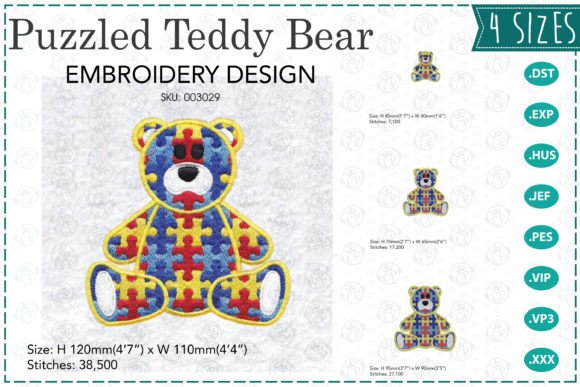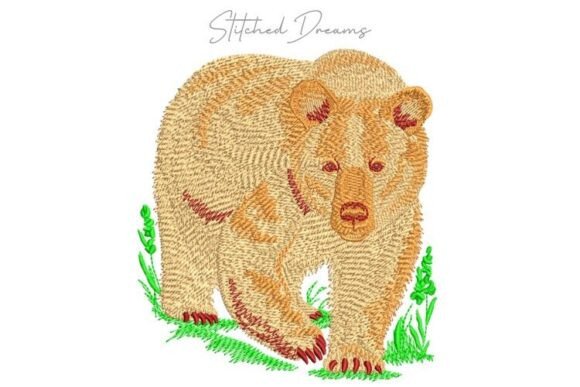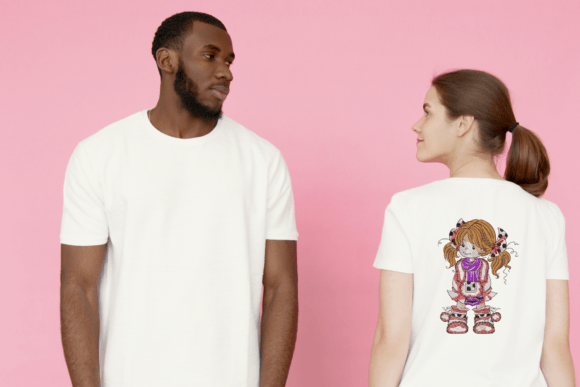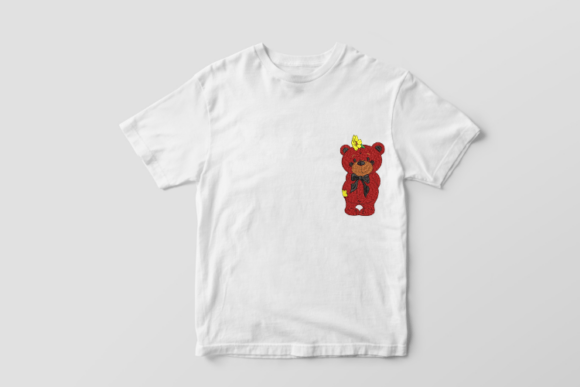
Teddy Bear Embroidery Design
First Impression: Soft, Sweet, and Instantly Relatable
As an embroidery designer who’s prepped over 200 craft fair booths—and shipped thousands of digital embroidery files—I opened Teddy Bear Embroidery Design expecting charm. What I got was immediate emotional resonance: soft curves, gentle facial features, and a quiet sweetness that reads as both timeless and tender. It’s not cartoonish or overly stylized—it leans into warmth, not whimsy. That makes it ideal for handmade product lines targeting new parents, gift shoppers, and boutique buyers who value sincerity over flash. It’s not rustic, not modern-minimal, not festive—but soft-cute: the kind of design that draws a smile before a buyer even reads the price tag.
Where Teddy Bear Embroidery Design Shines on Craft Fair Products
This design thrives where emotion meets utility—especially on items people hold, use, or gift. On a natural linen tote bag? Perfect. Centered above the pocket or scaled small near the handle, it adds personality without overwhelming. On a cotton apron? It works beautifully above the pocket or subtly on the bib—especially when paired with coordinating thread colors like heather gray or oatmeal. For tea towel embroidery, place it low on the hem or centered on the front panel; its compact shape avoids visual clutter on textured fabric while still reading clearly from across a market aisle.
As an embroidered patch, Teddy Bear Embroidery Design holds up exceptionally well—its clean outline and moderate detail translate reliably across iron-on and sew-on versions. On small fabric pouches or pillow covers, it scales down gracefully (down to ~3 inches wide) without losing expression. And for baby-related handmade products—think burp cloths, onesie accents, or keepsake blankets—it delivers exactly what customers search for: gentle, non-gendered, heirloom-adjacent charm.
What Holds It Back (and How to Work Around It)
Teddy Bear Embroidery Design is not built for ultra-fine detail work. There are no tiny eyes, micro-stitch fur textures, or intricate paw pads—so it avoids common pitfalls like thread breakage or fuzzy edges on dense fabrics. That said, always test stitch density on your target fabric: thick terry cloth towels or heavily textured canvas may mute subtle contours. Curved surfaces—like structured caps—require careful hooping and stabilizer selection; consider simplifying placement to flat panels (e.g., back strap or front crown seam) rather than the full front curve.
On dark fabric, contrast becomes critical. Light tan or ivory thread may disappear—opt instead for cream, light gray, or pale peach for visibility without harshness. And while the design reads clearly at 4–5 inches, avoid shrinking it below 2.25 inches unless you’ve tested it on scrap: small ears and facial features can blur, especially with lower-end machines or budget stabilizers.
Real-World Selling Power at the Booth and Online
In person, Teddy Bear Embroidery Design stands out because it feels *handmade*, not mass-produced. Unlike clip-art bears or over-digitized icons, this design carries nuance—a slight tilt of the head, balanced negative space around the muzzle—that signals craftsmanship. At a craft fair, it draws parents, grandparents, and gift buyers within three seconds. Paired with neutral fabrics and thoughtful packaging (kraft box + twine), it elevates perceived value instantly.
For Etsy sellers and digital shops, Teddy Bear Embroidery Design photographs beautifully—especially in natural light. Its balanced proportions make printable mockups easy to generate and consistent across listings. It also supports brand cohesion: use it across your tote bag design, apron embroidery, and tea towel embroidery lines, and customers begin to recognize your aesthetic—not just your logo. That repeatable, recognizable quality is gold for small shop product growth.
Production Notes Every Embroidery Designer Should Check
- Test first on scrap fabric—especially if using textured towels, fleece, or knit blends.
- Confirm thread contrast before stitching 50 units. A single mismatched shade can derail booth sales.
- Review spacing and stitch density—tight fills may pucker lightweight cottons; open satin stitches hold better on unstable weaves.
- Match hoop size to design footprint—don’t force a 4.5-inch bear into a 4-inch hoop without repositioning or resizing.
- Use cutaway stabilizer for knits and tear-away for stable wovens—this isn’t a “stabilizer-optional” design.
- Create at least one real mockup before listing or printing tags—digital previews lie; fabric drape changes everything.
- Compare fabric colors side-by-side—ivory thread on ecru linen reads differently than on oatmeal canvas.
- Verify commercial licensing before selling finished products—Teddy Bear Embroidery Design is intended for craft fair product and handmade product use, but confirm terms directly with the source before scaling to wholesale or bulk retail.
Final Verdict: A Quiet Standout with Broad Appeal
Teddy Bear Embroidery Design doesn’t shout—it invites. It won’t dominate a bold, graphic-heavy booth, but it excels in curated, cozy, intentional spaces: think handmade markets focused on baby goods, slow living, or nostalgic gifting. As a machine embroidery design, it’s forgiving for beginners yet refined enough for seasoned pros. As a digital embroidery file, it’s versatile across categories—from Toys to kitchen textiles—without feeling off-brand. And as a craft fair product anchor, it pairs effortlessly with other soft-cute motifs (bunnies, clouds, stitched hearts) to build a cohesive, emotionally intelligent collection.
If you’re choosing one embroidery file to launch a new line of small shop products—or refresh your current booth lineup—Teddy Bear Embroidery Design earns its spot. Not because it’s trendy, but because it’s trusted. Buyers recognize kindness in stitchwork. They feel it in the weight of a linen tea towel. They remember it on a child’s first embroidered onesie. That’s not just embroidery. That’s connection—stitched, sold, and shared.